

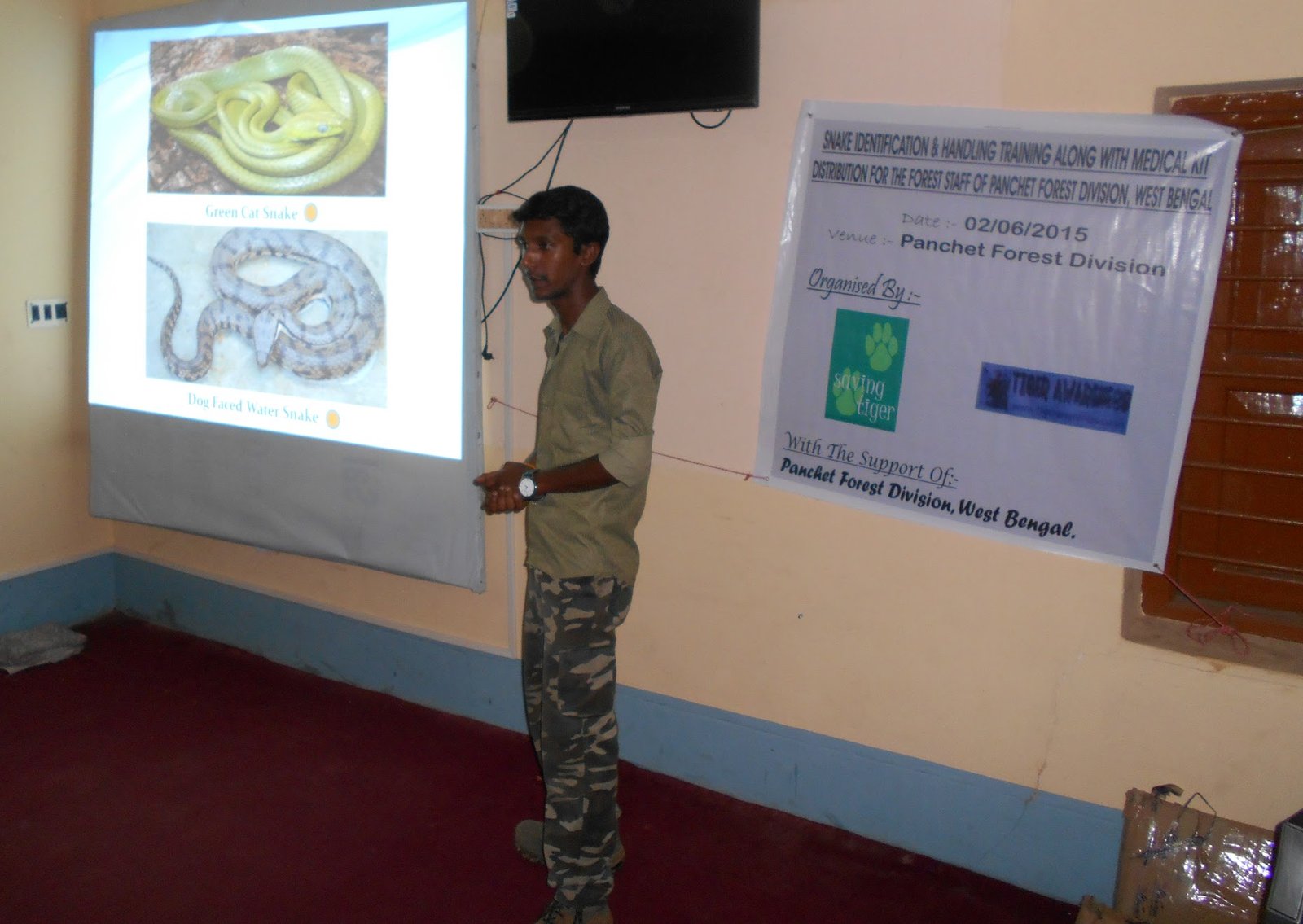
Snake are elongated, legless, carnivorous reptiles of the suborder Serpents. Living Snakes are found on every continent except Antarctica. More than 20 families are currently recognized, comprising 3,400 species. Most species are non-venomous and those that have venom use it to kill and subdue prey rather than for self-defense. No venomous snakes either swallow prey alive or kill by constriction. Snakes are widespread animal cause snakes are found on Land, Water and Tree. In India 279 species of snakes are found. While most of the snakes are no venomous.
The skin of a snake is covered in scales. The body scales may be smooth, keeled or granular. Snakes are cold blooded animals.
SOME MYTHS ON SNAKES
1. Rat snake are Venomous
Rat snake are non venomous.
2. Rat snake mate with Cobra
Rat snake or any other snakes will not mate with any snake out of its own species.
3. Snakes drinks Milk
Snakes drinks water and do not drink milk, neither can they digest properly. But in crises when severely dehydrated a snake might drink any liquid available.
4. Snakes carry a Jewel on their head
It is impossible for a snake to carry anything in its head. The mythological status attached with a snake in India is probably responsible for this myth.
5. Snakes remember you if you hurt them
Snakes are not vengeful animals and do not have the necessary intelligence to remember people or places for getting revenge.
6. There are two headed Snakes
The snake charmers spread the myth about the two headed snakes only to maintain the mythological status of the snake in India so they can continue attracting large crowd to their shows. In reality nothing like a two headed snake exists.
Snake bite and its management
Most of snakes living around us are non venomous. While some species are venomous only a few are dangerously venomous. Snakes never bite people to take revenge, fact is that snake bites only in defense when cornered, caught or stepped on it accidentally. Further before striking, snakes usually warn the intruder by various threat displays (hissing, raise hood, flattened body or coiling).often fatal bite occurs during an attempt to catch a snake or carelessly putting hands or feet in such places that are preferred by snakes. Handling snake is ‘not a joke’ leave that for a trained person. It is important to note that no Snake in India can kill a healthy adult human instantaneously. If proper medical care and first aid is given immediately, death is unlikely even from a dangerously snakebite, majority of snakebite deaths are result of wrong line of treatment offered by TANTRIK or OJHA.
The following guidelines are universally accepted by medical practitioners and authorities on Snakebite.
- Do not panic or run, it is necessary to stay calm. If possible identify the Snake.
- Report the incident to family and friends and ask for help immediately.
- Carry the victim. As exercise increase blood flow and venom spread. If you are alone, walk as slowly as possible.
- Do not waste time in traditional treatment by local ‘trantik or ojha’
- Hospitalized and proper treatment at the earliest is must for the victim.
- Do not drink alcohol or water.
- Do not make crow around the victim.
- Do not cut or squeeze the injury.
- Inform the doctor about any of the following sings appearing on the way to the hospital: difficulty in breathing and speaking, drooping eyelids, vomiting, pain in belly, bleeding from gum, drowsiness.
- ANTI-VENOM, is the only medicine on snake bite.
PREVENTION
- Look where you are putting your feet and hands, carry a TORCH at night.
- Never try to catch a snake or kill it. Maintain a safe distance from snakes.
- Keep your house, workplace and surrounding clean.
- Clean and remove garbage, logs and other unuseful things.
- Wear boots those who are work in the field and forest.
- Avoid sleeping on ground, if there are snakes around. A snake would only rarely climb on bed.
- Use mosquito-net at night and when sleeping.
