

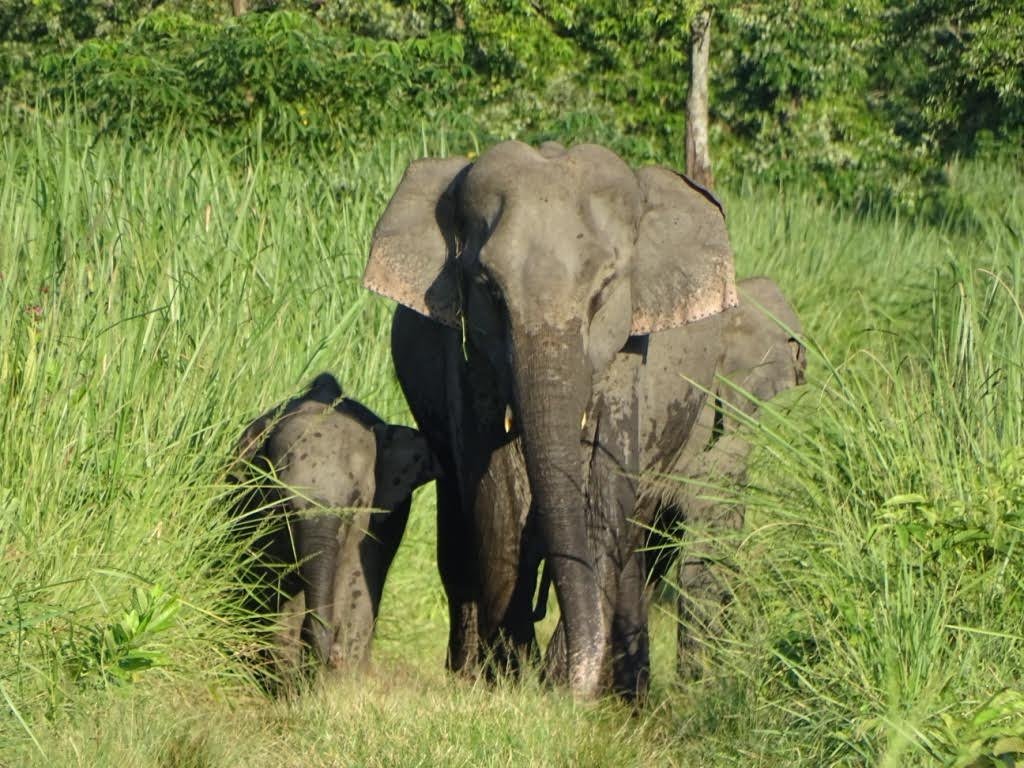
India is the large place for wild Asiatic elephants. The situation facing the Asian elephant is critical. Its population has declined over the past half century to estimated 30,000 – 50,000 animals in the wild. Asian elephants today also have lesser natural habitat to feed and roam. Habitat destruction and fragmentation are the root causes of many conservation problems. India is home to between 50 and 60% of all of Asia’s wild elephants and about20% of the domesticated elephants. As such the country is of paramount importance for the survival of the species. The elephant plays a central role in Indian life and has done for many centuries. Elephant are closely associated with religious and cultural heritage, playing an importance role in the Country’s history. They remain revered today. An India without elephants is simply unimaginable.
In past centuries, the forests of India literally teemed with elephants. Today’s population is obviously a fraction of that, but large numbers of sustainable herds exist – particularly in the south and northeast.
Wild elephants in India are facing a variety of problems, but most focus around the usual issues of habitat loss and human – elephant conflict. These have been on the increase since the middle of the 20th century as the explosion of the population and the demands of economic development led to the clearing and cultivate of former elephant habitat.
India has a long history of elephants in domestication with the animals participating in many areas of Indian life from war and ceremonial use to transport, construction and logging. The elephants are engaged in domestic type work like – Temple Elephants, Festival Use, Tourist Elephant, and Forest Department Elephants etc.
Efforts for the conservation of the elephant in India were initiated in 1873. But the earlier laws were quite liberal as regards capturing of elephants and permitted their killing. No attempt was made to control the ivory trade and protect habitat of elephants. As a result elephant population in the country continued to decline. The elephant was included in Schedule I of the Wildlife Protection Act, 1972 on 5.10.1977.
But the overall status of elephant and their habitat continues to be precarious. Incidences of killing of elephants by poachers for ivory and by farmers in retaliation to crop damage, are on the increase. Habitats and corridors of elephant are under tremendous pressure in many States on account of deforestation, encroachment and other biotic factors. In some regions, poaching of tuskers has disturbed the sex-ratio in elephant population to alarming proportions. Human-elephant conflict has become a serious issue and the people are turning hostile to elephants and the forest staff. Status of domesticated elephants in India is also not satisfactory. The veterinary support for elephants is not adequate. It is necessary to make systematic and sustained efforts to deal with various problems concerning conservation of elephants.
Throughout Asia large tracts of forest habitats are being lost. Today, Asian elephants often exit within patches of forests which are surrounded by land occupied by people and crops. Increasing levels of destruction of crops and homes by elephants has led to tension between local communities and elephant, the resultant conflict is a major concern for the future of elephants. India has a significant and globally important Asian elephant population, however the many herds here must move through a landscape dominated by tea gardens, rice crops and some rural villages. In many areas villagers suffer significant losses to crop, property and also human life, and these once tolerant communities are often forced to take lethal action against the elephants.
Together with the local communities we have implement a range of methods to help keep elephants and people from harm. Education and awareness, alternative livelihood and capacity building projects have also led to much improved attitudes towards elephants and community engagement in local conservation projects.
Act for wildlife, with your support, can continue expand its work throughout the elephant’s range, working towards a landscape where people and elephants can both be safe.
